
Researchers at the Department of Evolutionary Psychology and Education of the Polytechnic University of Valencia (UPV/EHU’s) Faculty of Education, Philosophy and Anthropology discovered that “cartoons may be used both at school and at home to train children in values and countervalues, to deal with moral reasoning and to develop narrative skills as long as suitable resources are used and are adapted on the basis of age.”
The Polytechnic University of Valencia is a Spanish university located in Valencia, with a focus on science and technology.
Media consumption by schoolchildren in the 3rd year (8-9 year-olds) and 6th year (11-12 year-olds) of Primary Education, their narrative skills and the perceptions they have about the values/countervalues of cartoons was explored and the research was conducted in various phases.
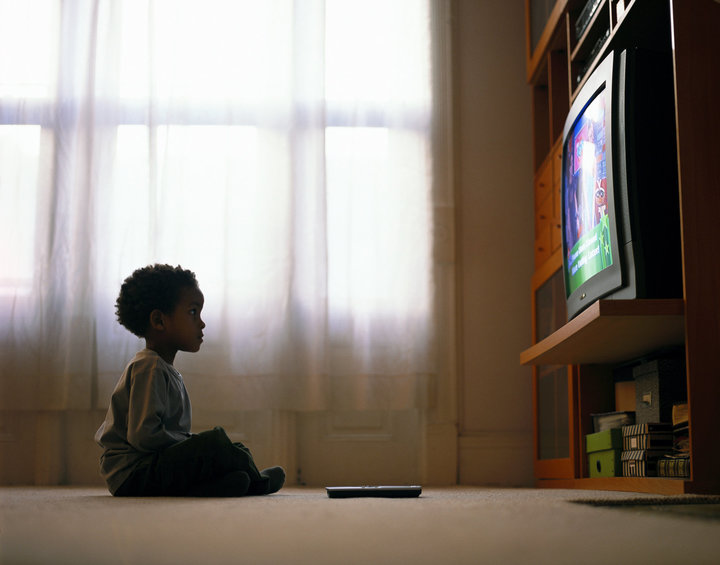
To conduct the study two types of cartoons were selected on the basis of high audience rates in the age groups being targeted by the study: Doraemon, with a narrative structure, and Code Lyoko, with a non-narrative structure. After displaying the cartoons, “we asked the schoolchildren to tell us what they remembered from what they had seen, and that way we analysed their narrative skills as well as the values and countervalues they had perceived,” added Oregui, who was responsible for the research. The accounts by the schoolchildren who had watched the cartoons with a narrative structure were much longer and more detailed and the values and countervalues were perceived effortlessly. In the case of the non-narrative ones, however, the accounts were very short, they had been altered, and focus was placed almost exclusively on the sequences of the action; the children also experienced greater difficulty perceiving the values and countervalues of the subject matter.”
The researchers also measured the schoolchildren’s attention capacity while they were watching the cartoons, and they noticed that the cartoons with a narrative structure provided the children with attention breaks. By contrast, during the non-narrative cartoons the schoolchildren maintained continuous eye contact with the screen.
In any case, the researcher regards both types of cartoons as valid. “The same values/countervalues always appear in the narrative cartoons analysed but in different situations, and this aids the children’s comprehension and processing; yet it is possible to find more types of values and countervalues in non-narrative cartoons So this study has given rise to some proposals targeting schoolchildren, family members and professionals in the sphere of psycho-education and communication, and which are designed to encourage the development of children’s narrative skills and education in values and countervalues through their favourite fictional content.
The researcher also referred to the importance of furthering the classification of cartoons; she proposes that they be classified not only on the basis of their content, but also on the basis of their narrative level or their structure and the values they deal with. Oregui said that in the end “cartoons may be used both at school and at home to train children in values and countervalues, to deal with moral reasoning and to develop narrative skills as long as suitable resources are used and are adapted on the basis of age.”
(Source: science direct)
