
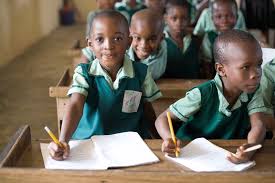
“Educate your child and he shall give you rest.” This is a popular quote most people have been used to. As a youngster in primary school, this inscription was the motto of my school. It was visible everywhere from the entrance to the classrooms. For a long time, I remember wondering what educating a child has got to do with rest. Fast forward many years later, I no longer wonder because the effect of a lack of quality education stares the entire nation in the eye. What are some of the causes and how can stakeholders ensure quality education?
One major factor that has made it increasingly difficult for children to access basic education in Nigeria is conflict and violence. About 10.5 million children are out of school in Nigeria. Of this figure, sixty percent are in northern Nigeria (UNICEF). Children have become afraid to go to school because of fear of being kidnapped, killed or maimed. School teachers have been kidnapped or killed and several schools closed down as a result of these vices. These leads to increasing social vices as inability to go to school exposes these youngsters to negative influences.
In places where efforts have been made to ensure children get access to education, this is sometimes carried out in the most austere circumstances. It is shocking to note that these austere circumstances are not limited to the rural areas alone. This is because some urban areas still have schools without walls or chairs.

A second factor is early child marriage. This is predominant in the northern part of Nigeria where female children get married very early. About 60 percent of the out-of-school children in Nigeria are girls(UNICEF). This is not unrelated to the fact that several of these young girls are married off by their parents even before puberty. Most often this happens without their consent. This practise has led to future health problem like Vesicovaginal fistula (VVF),maternal mortality and infant mortality.
A third factor is the present school curriculum. At the Business of Education Conference 2018 which recently held in Lagos, both local and international education experts agreed that the future of work has changed. This brings about a need to change the way the current Nigerian child is tutored in school.
One of the keynote speakers, Prof Fred Mcbagonluri explained that there is an urgent need to revamp the present curriculum. According to him, the present curriculum in most schools is not geared towards preparing our young ones for future jobs. If the schools do not incorporate these skills early enough, children would not be ready to tackle future tasks that would arise on the job. Therefore, he suggested an immersed learning approach in addition to incorporating relevant skills like design thinking, social intelligence, emotional intelligence, creativity, active learning amongst others skills into the curriculum.
All stakeholders present agreed that to ensure quality education, proper quality monitoring and evaluation should be maintained at all levels. If monitoring and evaluation is assigned to external bodies, a remarkable difference would be achieved. Educators should also ensure early and continuous child assessment in other to determine and encourage a child’s natural abilities.
As a nation, the effect of the inaccessibility of basic education to the present Nigerian child can no longer be ignored. If the present situation continues, there might be an overwhelming increase in social vices, poverty, maternal mortality and other problems. Consequently, for children to give parents and the society the desired future rest, all the stakeholders must work together collectively to achieve this goal. Parents, school owners, policy makers and government authorities must work together to provide an environment that would enable a desired future rest for all.
Ngozi Ojo is a writer and business consultant
