
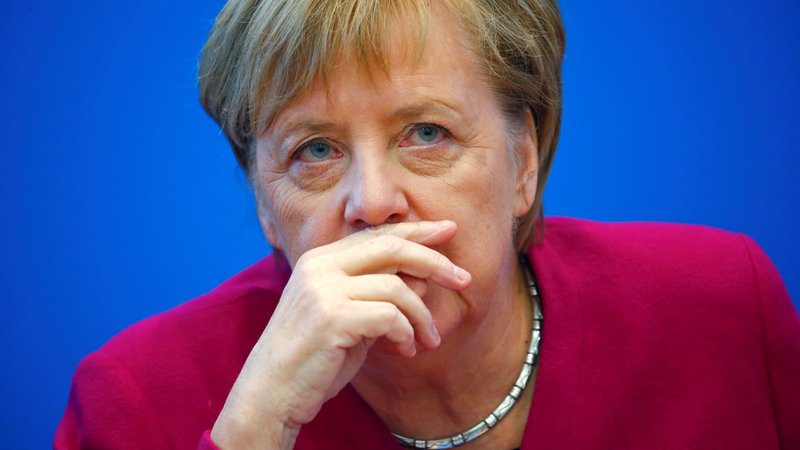
The German chancellor welcomed 11 African leaders to Berlin to introduce them to the CEOs of Germany’s biggest firms. Outside, protesters demanded Germany stop doing business with dictatorships across the continent.
“Africa is open for business.” South African President Matamela Cyril Ramaphosa couldn’t have made the basic purpose of the G20 investment summit any clearer. Ramaphosa was one of eleven African leaders in Berlin on Tuesday for what the German government said was the biggest African event the country had ever hosted.
It was also a shop window for Germany’s world-dominating companies to show those leaders what they could do in their countries, and what they had already done in Africa.
Throughout the early afternoon, as Angela Merkel sat in the front row alongside her African counterparts, representatives of Siemens, Allianz, Volkswagen and others took turns on stage to present power plants in Egypt and Togo, automobile factories in Tunisia and Rwanda, and decentralized solar power systems in Senegal.
The top brass were all on hand, some in military uniform, in the red-carpeted conference center squeezed between the Brandenburg Gate and the luxury Adlon hotel on Berlin’s tony Under den Linden boulevard: Siemens CEO Joe Kaeser was there to sign a memorandum of understanding with the Egyptian business minister, beneath the gaze of the country’s president – some would say dictator – General Abd al Fattah el-Sisi.
Beforehand, Merkel used her brief keynote speech to present the government’s package of measures meant to benefit Germany’s Compact partner countries, and to lower risks for German investors. The measures included a new development investment fund for small and medium-sized companies to finance loans, new tax agreements to ensure that companies don’t have to pay taxes in both countries, as well as so-called reform partnerships – which make aid money contingent on carrying out reforms.
The chancellor’s words went down well. And local politics, too, was noted: Ghanaian President Nana Akufo-Addo took the opportunity to lament the chancellor’s “imminent departure from the political scene” and call her “one of the greatest leaders of modern times”).
German development minister: ‘Africa’s women are the key to its success’
“There has been a perception of risk about investing in Africa,” Guinean Investment Minister Gabriel Curtis told DW. “I think that with the announcements that the German chancellor made today, that should help encouraging German companies.” He went on to praise Germany’s “Compact” initiative: “It’s highlighting the reforms we’re already making, and to ensure that we have an appropriate business climate.”
(allafrica)
